



BehaviLab – Human Performance & Behaviour Testbed

SHORT SUMMARY
The BehaviLab – Human Performance & Behaviour Testbed at XR Institute is a multidisciplinary research environment focused on the interaction between humans and advanced technologies. The lab focuses on ergonomics, usability, cognitive workload, and physiological responses in immersive, industrial, and collaborative settings. Its mission is to ensure that DeepTech and Industry 5.0 solutions remain human-centred, safe, and accessible.
Within the CITADELS Framework for Accessible and Impactful DeepTech R&I Infrastructure by offering a controlled, high-fidelity environment for studying how people interact with digital and robotic systems. Through its specialized equipment and expertise, it enables Proof-of-Concept development and DeepTech Deployment in domains such as human-machine collaboration, operator training, and safety evaluation.
Research talents will be able to use the infrastructure to conduct ergonomic and behavioural experiments, evaluate usability and user experience, and validate human-factors approaches aligned with Industry 5.0 principles.
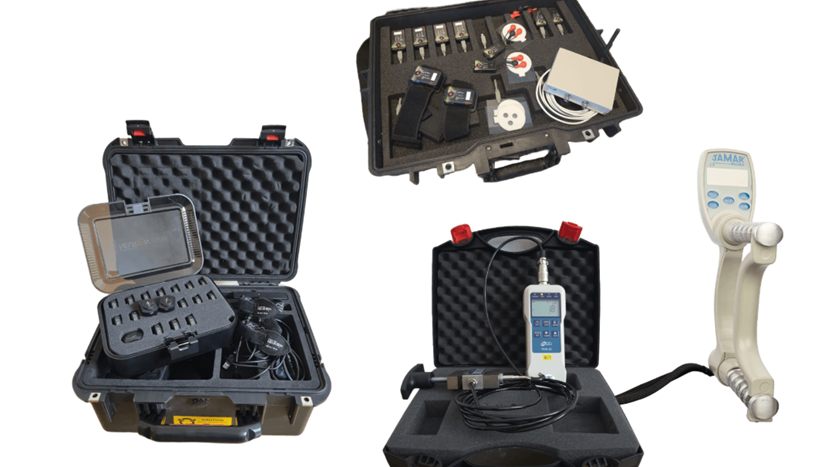
The key technology focus of the lab lies in human-centric interaction, combining ergonomic and cognitive workload analysis with motion tracking, biomechanical monitoring, XR simulation, and behavioural data analytics. AI-driven data processing supports detailed evaluation of performance, safety, and user experience, directly contributing to human-centric innovation ecosystems.

HOSTING INSTITUTION AND PI INFO
| Name of Host Organization | XR Institute |
| Department or Lab | N.A. |
| Name of Building | TechTower |
| Physical Address | Koterovská 2827/152, 32600, Pilsen |
| Website Links | https://www.techtower.cz/en/ |
| Institutional contact name | Ing. Marek Bureš, Ph.D. |
| Institutional contact email | bures@xr-institute.cz |

APPLICATION CASES
| Application case: | Short description: |
| VR Police Training Scenario |
The BehaviLab – Human Performance & Behaviour Testbed at the XR Institute has been utilized in diverse projects and experiments. One representative case is the VR Police project: Innovative system of virtual reality and simulated model cases of security character facilitating training and treatment of police officers in risky situations (VK01020196). The project (running January 2023 – December 2025) is focused on developing a structured VR-based training system for law-enforcement officers (members of the Czech Police forces) that simulates real-world high-risk interventions. It comprises two main modules: 1. A training module for procedural drills aimed at improving response efficiency during tactical or criminal incidents. 2. A behavior-and-decision module testing correct reaction and conduct in selected security scenarios. The system is designed to measure, record and analyze physiological reactions of participants – such as heart rate – while undergoing training in immersive VR scenarios. The software also supports simulation of diverse event types, including evolving criminal characteristics or terrorist-attack patterns, and specific site conditions of intervention. The testbed enabled simulation of real-world operations in a controlled yet realistic environment and allowed evaluation not only of procedural performance but also of operator stress, workload, and ergonomic factors. These experiments align with the framework of CITADELS by offering seconded talents direct access to cutting-edge infrastructure, enabling them to develop and validate DeepTech solutions (e.g. adaptive training modules, stress-aware interfaces) that are human-centred and industrially scalable. One of the realistic environment takes place at the airport. The Airport application focuses on security profiling in an airport terminal with the aim of detecting potential terrorist threats. The user, acting as first-response officer, analyses the environment, identifies high-risk individuals, and examines suspicious objects. A key aspect of the simulation is the recognition of warning signs such as unusual passenger behaviour, unjustified nervousness, or suspiciously placed luggage. The application is available in two versions: a training version, where the user is guided by voice instructions, and a testing version, where the user must resolve the situation independently based on previously acquired knowledge. The application incorporates several unique technical feature. One of them is integration with a sensor system that monitors the user’s stress level and heart rate. Random placement of high-risk individuals and object at each launch minimizes repetition and increases training effectiveness. The system also includes voice control via speech recognition, enabling real-time interaction with virtual avatars. The user can ask a limited set of questions such as “Can you show me your passport?” or “Can you show me your ID?”. Another environment takes place in the hospital. The Hospital application which is designed to train police officers for interventions involving an active shooter. The user takes on the role of a first-response officer who must search the building, identify the attacker, and neutralize him/her. The scenario simulates realistic conditions, including injured individuals, hysterical or hiding civilians, and the need for verbal communication with them. The application is developed in two versions: a training version, which guides the user step-by-step toward successfully completing the procedure, and a testing version, in which the user must resolve the situation independently based on previously acquired knowledge. The application incorporates several unique technical features. These include the use of customized controllers in the form of Glock 17 and CZ P-09 firearm replicas, combining authentic weapon ergonomics with full VR-controller functionality. It also implements voice control through a speech-recognition system, enabling natural interaction with avatars and effective real-time communication. The users can ask questions such as “Where is the shooter?” to communicate with the civilians or “Raise your hands”, “Drop your gun” etc. to interact with the attacker. Both these applications use realistic visual and audio elements that increase the psychological intensity of the scenarios and incorporate adaptive mechanisms to ensure a unique training experience for each user. The combination of these technologies enables trainees to gain practical experience in crisis situations, thereby improving their preparedness for real-world interventions. |

POTENTIAL STAKEHOLDERS
Non-academic stakeholders
Industrial Partners, Startups, SMEs
Academic stakeholders
PhD students, MSc students, Researchers